
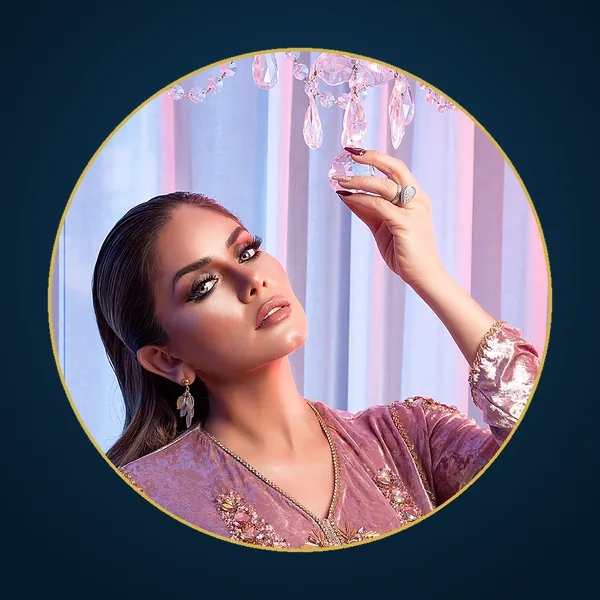
Yezenia Navarro
She became part of Qatari society and embraced its causes, investing her many talents in sport, culture and community life.
2022 edition · source pages 660–667
At a Glance
Yezenia Navarro is the leader of the Mexican community at the Supreme Committee for Delivery and Legacy, and an actor, influencer, social activist and former model based in Qatar.
A Creative Childhood in Mexico
A football-photography initiative brought together workers, supporters, journalists, coaches and players, producing stories through photographs taken by more than thirty Qataris and residents.
She grew up in Mexico with a sister and a mother who devoted long hours to both daughters, teaching them to read and count from their earliest words. Their mother sewed their dresses, arranged their rooms and shared a love of handicrafts, drawing, baking and cake decoration. Their father contributed a gift for singing. A home shaped by art and practical creativity helped form a confident child who took part in plays, festivals and activities inside and outside school.
Family life also exposed her to the lasting effects of unresolved trauma. Difficult experiences from her mother’s childhood affected the marriage and caused periods of crisis at home. The experience taught her how untreated pain could damage relationships and families, while giving her a strong awareness of the psychological weight carried from one generation to another.
Marriage, Travel and an Expired Visa
After studying communication, she received a scholarship in Mexico City and pursued theatre arts and communications, sometimes studying continuously from eight in the morning until eight in the evening. Early motherhood had already required a change from a private university to a public institution closer to her family, allowing relatives to help care for her first child while she completed her education.
In 2011, her husband accepted a position with Qatar Airways and the family moved to Doha. An expired visa left her and her eldest son at the airport for two days, while the younger children entered because they held American citizenship. She nevertheless developed a deep attachment to Qatar and later chose to remain with the children after her husband’s contract ended and he returned to Mexico.
Arrival during Ramadan brought an unfamiliar culture, intense heat and severe isolation. She could not use her Mexican driving licence, spoke neither English nor Arabic and initially had little freedom to move. Depression followed, and she lost ten kilograms in a month. After two months, she decided that the situation could change only if she actively entered the society around her.
Taking her children to the residential complex’s club opened the first friendships. Brazilian acquaintances helped her learn Portuguese, daily life strengthened her English and she obtained a local driving licence. She contacted agencies, magazines and producers directly. Within three months, she had secured a first fashion show, photographic work and commercial films; magazine appearances followed in October and November, and she appeared on the covers of two local magazines in December 2011.
Building a Life in Qatar
Her public work expanded into social advocacy. She founded Queens Without Scars to raise awareness of violence against women and domestic abuse, announcing the organisation during her participation in a married women’s pageant in Malaysia in 2014 and later announcing a branch in Qatar. She was also invited as an individual United Nations expert to the thirteenth UN Congress on Crime Prevention and Criminal Justice in Doha.
Leadership of the Mexican community at the Supreme Committee for Delivery and Legacy connected social service with Qatar’s sporting preparations. She promoted the 2022 World Cup and other events and was among a small group invited by FIFA to cover the 2018 World Cup final between Croatia and France in Russia through social media.
When supporters of Monterrey sought information about the FIFA Club World Cup in Qatar, she coordinated with relevant bodies and offered guidance on dress, local customs and the country’s conservative traditions. She also introduced tourist destinations and acted as a link between organisers and visiting supporters, including meetings concerned with the needs of the Mexican community.
Sport, Culture and Community Service
Work with the National Tourism Council and Qatar Airways covered concerts, festivals, exhibitions and tours associated with the Club World Cup. She participated in Mexican cultural performances at the opening of Al Janoub Stadium, community events at Katara and fan zones for the Arabian Gulf Cup and the FIFA Club World Cup. Qatar Airways also selected her among the social-media figures travelling to Peru for the Copa Libertadores final.
With support from the Mexican Embassy and members of the community, she contributed to promotional interviews for local and international television and supplied official information for Mexican visitors. She joined other community leaders on tours of sites including Souq Waqif, helping explain both Qatar’s attractions and its preparations for welcoming football supporters.
The Goal Click project gave her a disposable camera to document football culture through the lives of people in the host country. Her photographs emphasised family connection and the place of football in everyday life; selected images appeared at events in Cuba, the United States, Brazil and Qatar. Interviews with beIN Sports and Al Kass further allowed her to discuss Monterrey, the Mexican community, Qatar’s football culture and women’s growing participation in sport.