
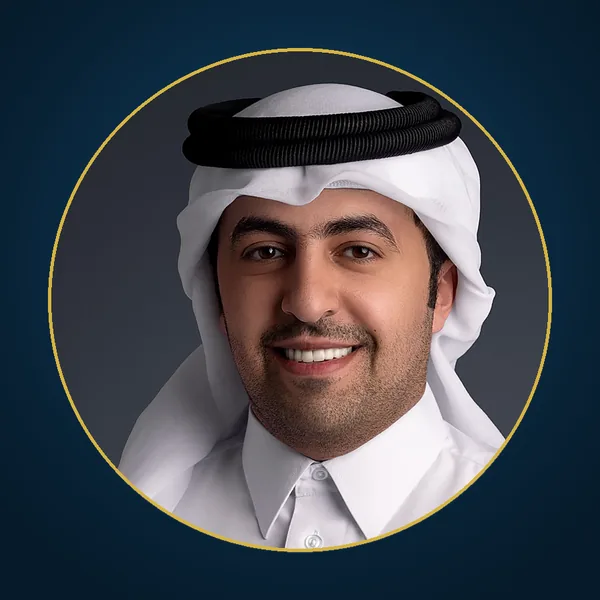
Sabah Al-Kuwari
A Qatari public-relations and corporate-social-responsibility executive whose career has included telecommunications and television.
2024 edition · source pages 562–569
Profile
Sabah Rabiah Sabah Al Kuwari is a Qatari public-relations and corporate-social-responsibility executive. His career has included senior responsibility at Ooredoo Qatar and earlier leadership at Al Rayyan Television.
Biography
Journalism and media form part of his family legacy. His father, Dr Rabiah Al-Kuwari, was a prominent academic and media professional, and that example shaped his conviction that media carries a lasting public responsibility.
Born in Doha, he was the eldest child in a family of eight. His father was the first Qatari professor in the College of Mass Communication, chaired the faculty at Qatar University and directed the Media Department at the Gulf Cooperation Council. Family life provided both encouragement and a model of achievement. Sabah became a confident and articulate pupil who delivered speeches, chaired school sessions and approached tasks with diligence, speed and a clear sense of purpose.
He attended Al Furqan Primary School, followed by Omar bin Al-Khattab Preparatory and Secondary School, then known as the Science School and recognised for its demanding standards. A mark of 96 per cent in the sixth year fell to 72 per cent after the move, then declined again. His mother had to sign an undertaking that his performance would improve if he were to remain. The episode prompted sustained effort: his mark rose to 82 per cent in the third preparatory year and reached 90 per cent by the end of secondary school. Extracurricular work developed leadership, teamwork and time management. As deputy chair of the student council, he further strengthened those skills. Dr Abdul Rahman Al-Harami became an important influence, and their relationship continued into university.
Known for taking initiative, he helped train a group of younger pupils. Dr Al-Harami's trust in him grew, and he relied on Sabah to help prepare the programme while still at secondary school. Despite the demands of that period, he graduated with distinction at sixteen.
The school guidance committee helped him secure scholarship approval and admission to five British universities, supported by a strong IELTS result. He selected a university in Newcastle and signed an agreement with the Olympic Committee while also applying to Qatar University as a precaution. A week before departure, he saw how deeply the separation distressed his mother and cancelled the scholarship so that he could remain in Qatar. Although initially disappointed by the sudden change, he later concluded that study in Qatar had enabled the professional experience and extensive relationships that became central to his success. With faith, his parents' prayers and their continued support, he studied finance and management at Qatar University.
During university, his father encouraged him to audition as a broadcaster for Qatar Radio. Sabah was surprised and initially uninterested because his father had recognised an ability he did not yet see in himself. He nevertheless joined a course with Qatar Television's development committee. Before it ended, Dr Rabiah—then media adviser to the newly established Al Rayyan Television—suggested that he join the new channel's team. Its remit centred on Qatari popular culture and heritage and on bringing young Qatari presenters to the screen. His father nominated him to His Excellency Salah bin Ghanem Al Ali, and he entered television as a trainee. A meeting between the trainees and the minister made him realise the seriousness of the opportunity.
When Al Rayyan launched in May 2012, he was among its first on-screen presenters. The channel's decision to foreground Qatari media professionals received a positive response at a time when many young people were still reluctant to appear publicly. By giving first opportunities to new Qatari voices across different fields, it helped remove that barrier and generated wider interest in media careers.
His years at Al Rayyan were among the most rewarding of his life, despite the difficulty of balancing broadcasting with university. He also married during his final year. Determined to graduate quickly, he maintained long days of study and even travelled to Jordan for an additional summer course. On some days, classes ran from eight in the morning until five in the afternoon, after which he went directly to the channel to present his programme.
He served as master of ceremonies at Qatar University's graduation in the presence of His Highness the Amir. The Amir's encouraging address to the graduates made a lasting impression. A year later, Sabah began an executive-management master's programme in Britain and completed it in less than two years.
At Al Rayyan, he progressed from presenter to Head of Social Media, Head of Programmes, Director of Planning and Programmes, Director of Creativity and ultimately Director of Al Rayyan Satellite Channel.
Some colleagues were accustomed to established routines and initially resisted change. Most responded quickly, while the confidence of one colleague took longer to earn. Sabah eventually built such trust that the colleague consulted him on every detail. The work transformed the channel's social-media presence.
Senior management then entrusted him with the Programmes Department. He revised procedures and programme operations, supported by a young and energetic team whose strong working relationships helped deliver substantial improvements in both content and practice.
Major occasions brought particular pressure, among them National Day and the Ramadan programming season.
Success in programmes led to responsibility for the Creativity Department. Although initially unhappy to leave his previous role, he found that more than a year in the department broadened his perspective and became an important stage in his development.
After nearly ten years at Al Rayyan and having reached its senior leadership, he felt that he had fulfilled his responsibility and should contribute in a new setting. During an informal conversation, Ooredoo Chairman His Excellency Sheikh Abdullah bin Mohammed bin Saud Al Thani—an important leadership example—invited him to join the company. In February 2020, Sabah became Director of Public Relations, overseeing public relations, events and social media. Three years later, his remit expanded to include corporate social responsibility and sponsorships. Ooredoo's highly qualified team and supportive leadership gave him an environment in which to innovate. His Excellency Sheikh Ali bin Jabor Al Thani and His Excellency Sheikh Faisal bin Thani Al Thani provided particular support for young Qatari talent.
He regards management of Ooredoo's events team during the FIFA World Cup as one of his most important achievements at the company. As a tournament sponsor, the Qatari telecommunications company was present across events throughout the country and worked with partner organisations to activate numerous locations. The programme's success brought certificates of appreciation from participating bodies and from FIFA.
Another source of pride is the Volunteer Work Award he received in 2013 for charitable and voluntary activity with Qatar Charity campaigns, UNICEF, the Volunteer Work Centre and Qatar University's Ayyam initiative for Syrian refugees in Lebanon. His volunteering began at university and continued after graduation. Six years after graduating, he also received the Distinguished Young Alumnus Award for embodying Qatar University's values in the community.
He credits his parents' support throughout his life and the constant encouragement of his wife as essential to everything he has achieved.
In recent years, he accepted the risks of entering business, a long-standing objective. He established several ventures and succeeded in a field no one else in his family had entered. Before turning thirty, he built his own home.
Life has continually presented challenges. Moving between departments and overcoming resistance to the changes he introduced were among the most significant. In retrospect, he regards the variety of those roles and experiences as a principal reason for his success.